
ICD-10 Code
G43.909 is used to report migraine, unspecified, not intractable, without
status migrainosus. Healthcare providers assign this diagnosis when a patient
has a documented migraine condition that does not meet criteria for intractable
migraine or prolonged migraine attacks. Accurate use of ICD-10 Code G43.909
supports proper clinical
documentation, clean claims
processing, and appropriate reimbursement.
As one of the
commonly reported neurological diagnoses, ICD-10 Code G43.909 plays an
important role in healthcare documentation, medical claims submission, and
reimbursement workflows. Proper coding
reduces denials, improves
compliance and supports
efficient revenue management
across healthcare organizations.
What Is ICD-10 Code G43.909?
ICD-10 Code G43.909 is the diagnosis
code used to identify migraine,
unspecified, not intractable,
without status migrainosus.
Understanding the Code Structure
The ICD-10
classification system organizes migraine diagnoses into increasingly specific categories.
Category
G43 belongs to the migraine disorders
category within diseases
of the nervous system.
Subcategory
The G43.9
subcategory identifies unspecified migraine conditions when documentation does not
specify migraine type.
Specific
Diagnosis
G43.909 specifically identifies:
●
Migraine, unspecified
●
Not intractable
●
Without status migrainosus
This level
of specificity helps
providers accurately document
patient conditions while
supporting payer requirements.
What Does ICD-10 Code G43.909 Represent?
Clinical Explanation
ICD-10 Code G43.909 represents a migraine headache
disorder that is not resistant
to treatment and does not involve a prolonged attack known as status
migrainosus.
Condition Overview
Migraines are neurological disorders characterized by recurring headache episodes that may
include:
●
Moderate to severe headache pain
●
Nausea
●
Vomiting
●
Light sensitivity
●
Sound sensitivity
●
Visual disturbances
Clinical Importance
Accurate assignment of ICD-10
Code G43.909 helps healthcare providers:
●
Document migraine diagnoses
correctly
●
Support treatment planning
●
Improve reimbursement accuracy
●
Maintain coding compliance
●
Reduce claim rejections
When Is ICD-10 Code G43.909 Used?
Clinical Scenarios
Providers typically
use this diagnosis
when migraine is documented but the specific
migraine subtype is not identified.
Common Healthcare Settings
The code is frequently reported in:
●
Primary care clinics
●
Neurology practices
●
Pain management centers
●
Emergency departments
●
Outpatient facilities
●
Telehealth consultations
Documentation Requirements Patient records
should include:
●
Migraine diagnosis
●
Clinical symptoms
●
Headache history
●
Treatment plan
●
Provider assessment
●
Follow-up recommendations
Clear documentation supports proper
coding and reimbursement.
How to Bill ICD-10
Code G43.909 Correctly
Accurate billing begins with complete documentation and correct code assignment.
1. Document Clinical
Findings Thoroughly
Patient records should contain:
●
Detailed headache history
●
Migraine symptoms
●
Frequency of attacks
●
Duration of episodes
●
Treatment response
●
Provider evaluation
Strong documentation helps establish medical necessity and reduces claim
denials.
2. Confirm Diagnostic Criteria
Before assigning ICD-10 Code G43.909, providers should verify:
●
Migraine diagnosis is documented
●
No evidence of status migrainosus
●
Condition is not classified as intractable
●
Symptoms support migraine
diagnosis Proper verification improves
coding accuracy.
3. Maintain Accurate
Coding Practices
Organizations should:
●
Follow current ICD-10 guidelines
●
Use the highest
available specificity
●
Review provider documentation carefully
●
Monitor coding quality
regularly
Accurate coding improves reimbursement and compliance.
4. Avoid Common
Billing Errors
Common mistakes include:
●
Selecting unspecified migraine
when a specific type is documented
●
Missing clinical documentation
●
Incorrect diagnosis sequencing
●
Unsupported medical necessity
●
Incomplete provider notes
These errors frequently result
in payment delays
and denials.
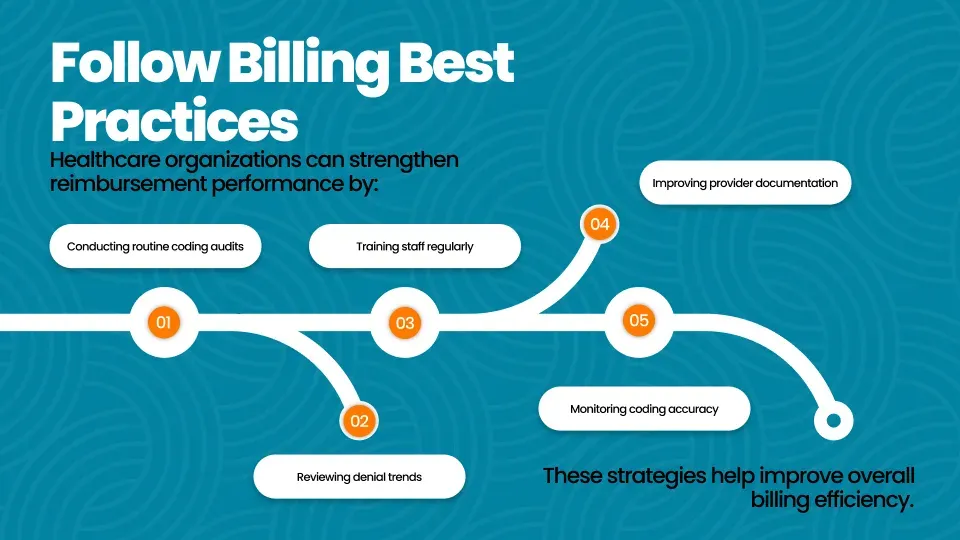
5. Follow Billing
Best Practices
Healthcare organizations can strengthen reimbursement performance by:
●
Conducting routine coding
audits
●
Reviewing denial trends
●
Training staff regularly
●
Improving provider documentation
●
Monitoring coding accuracy
These strategies help improve
overall billing efficiency.
Documentation Requirements for Migraine Diagnoses
Proper documentation is essential when reporting ICD-10 Code G43.909. Providers should clearly
document:
●
Patient symptoms
●
Severity of headaches
●
Duration and frequency
●
Treatment history
●
Medication effectiveness
●
Associated neurological findings
Comprehensive documentation strengthens coding accuracy
and reimbursement outcomes.
Role of Medical Billing
Services in Migraine
Coding
Many healthcare providers utilize professional medical billing services
to improve coding accuracy and reimbursement
performance.
Benefits include:
●
Reduced coding errors
●
Faster claim processing
●
Better denial management
●
Improved compliance monitoring
●
Enhanced financial performance
These services help providers manage increasingly complex
billing requirements.
How Medical
Billing and Coding
Services Improve Reimbursement
Accurate migraine coding directly
affects payment outcomes.
Professional medical billing
and coding services assist healthcare organizations by:
●
Reviewing documentation
●
Validating diagnosis selection
●
Ensuring coding compliance
●
Identifying missing information
●
Improving claim quality
These improvements support stronger
reimbursement performance.
Medical Claims
Submission Best Practices
Accurate medical
claims submission requires
complete documentation and correct diagnosis reporting.
Successful claims
generally include:
●
Proper diagnosis codes
●
Supporting clinical records
●
Provider documentation
●
Medical necessity evidence
●
Accurate patient information
Following these standards helps reduce denials
and payment delays.
Why Healthcare Organizations Outsource Medical
Billing Services
Many healthcare providers choose outsourced medical
billing solutions to improve operational
efficiency, reduce administrative burden, and strengthen reimbursement
performance.
Advantages include:
●
Reduced staffing costs
●
Improved coding accuracy
●
Better compliance management
●
Faster reimbursements
●
Enhanced workflow efficiency
Outsourcing allows providers to focus more on patient
care.
Benefits of Working with a Medical
Coding Company
Partnering with a specialized medical coding company
can strengthen coding
quality and compliance
efforts.
Benefits include:
●
Certified coding expertise
●
ICD-10 guideline knowledge
●
Reduced claim errors
●
Better audit preparedness
●
Improved reimbursement outcomes
These services help healthcare organizations maintain consistent coding performance.
FAQs
1. What is ICD-10 Code G43.909?
ICD-10 Code G43.909 identifies migraine, unspecified, not intractable, without
status migrainosus.
2. What does "not intractable" mean in migraine
coding?
It means the migraine
responds to treatment and is not considered resistant to therapy.
3. What is status migrainosus?
Status migrainosus refers to a severe
migraine attack that lasts longer
than 72 hours.
4. When should
ICD-10 Code G43.909
be used?
It should be used when migraine
is documented but no specific
migraine subtype is identified.
5. Why is accurate coding
of ICD-10 Code G43.909 important?
Accurate coding improves reimbursement, reduces denials, supports
compliance, and strengthens
documentation quality.
6. What documentation is required for ICD-10 Code G43.909?
Providers should
document symptoms, diagnosis, treatment plans, headache
history, and clinical
findings.
7. Can ICD-10
Code G43.909 be used for chronic migraines?
Only if provider documentation supports an unspecified migraine diagnosis and does not identify
a more specific migraine subtype.
Conclusion
ICD-10 Code G43.909 is an important diagnosis
code used to report migraine,
unspecified, not intractable, without
status migrainosus. Accurate
use of ICD-10 Code G43.909
supports proper clinical
documentation, reimbursement accuracy, compliance, and efficient claims
processing.
Healthcare
organizations that correctly report ICD-10 Code G43.909 can reduce billing
errors, improve claim acceptance rates, and strengthen overall financial
performance. Through proper documentation, coding accuracy, and effective billing
practices, providers can ensure successful reimbursement while
maintaining high standards of patient care.